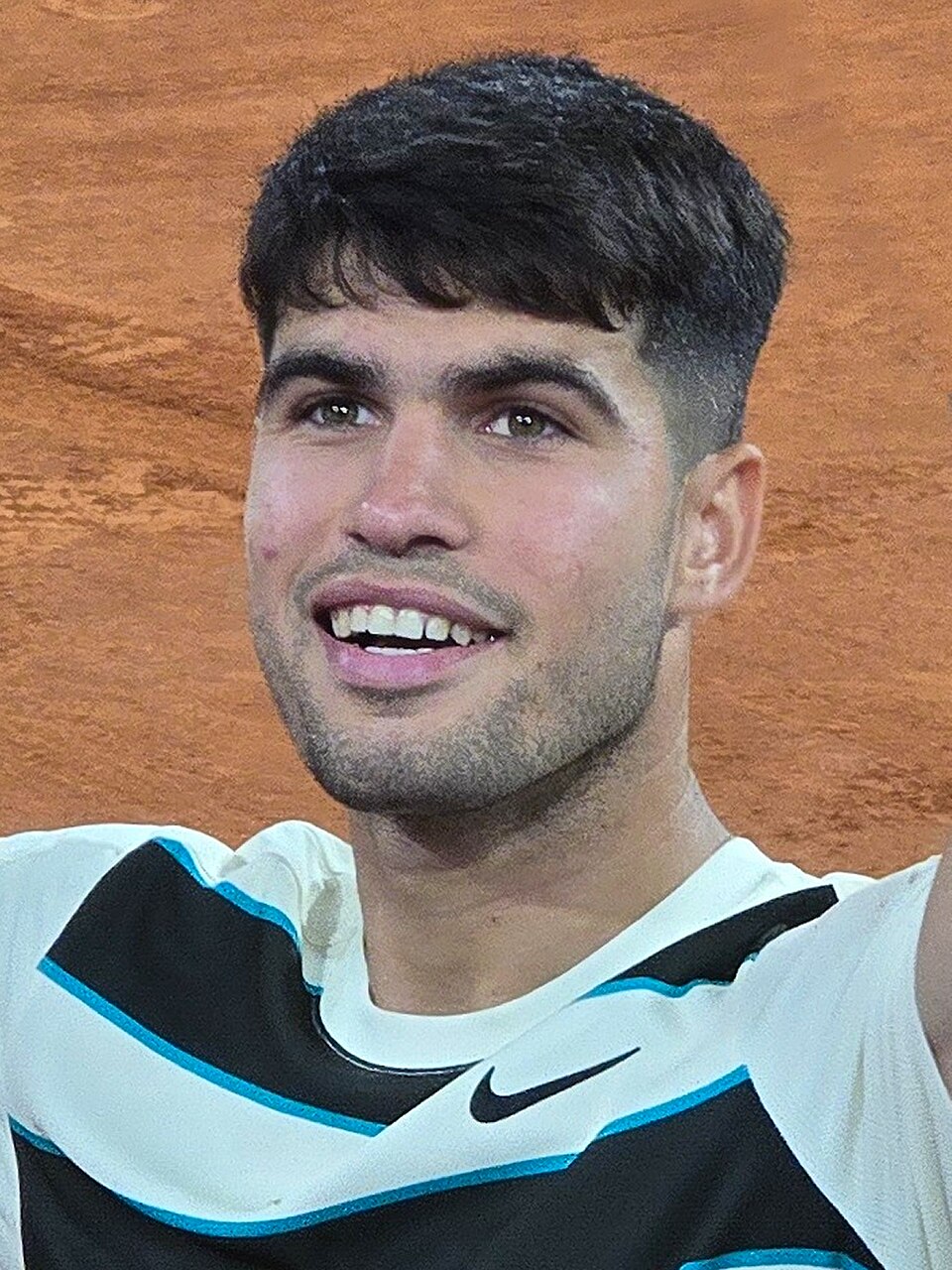
As the tennis world turns its gaze to the sun-drenched courts of the Indian Wells Tennis Garden, often hailed as the 'fifth Grand Slam' of the year, anticipation crackles with the promise of high-stakes drama. This Masters 1000 event marks not just a significant stop on the ATP tour but the initial skirmish in what promises to be a gripping battle for the World No. 2 ranking between two of the sport's most compelling figures: Carlos Alcaraz and Alexander Zverev. While the draw ensures they can only meet in a hypothetical final, their respective journeys to California present a stark contrast in mental preparation and recent form.
For fans closely following Alcaraz's trajectory and his quest for consistent dominance, understanding his mindset Alcaraz's Pre-Indian Wells Honest Look: 'Not My Best Tournaments' is crucial. This year, the focus isn't just on his explosive forehand or delicate drop shots, but on his psychological readiness. And as we delve into the details of Alcaraz's campaign ahead of this prestigious tournament, his declarations and recent performances offer a fascinating insight into a champion's mind.
Indian Wells: The Desert Stage and the Race for World No. 2
Indian Wells is more than just a tournament; it's an experience. Its majestic setting, coupled with the slow, high-bouncing courts and desert air, presents a unique challenge that tests players' endurance and adaptability. For Carlos Alcaraz and Alexander Zverev, however, the stakes are elevated beyond a mere title chase. This event, distributing a crucial 1000 points to the winner, kicks off a demanding month on the tennis calendar, immediately followed by the Miami Masters 1000. It offers Alcaraz a prime opportunity to surpass Zverev and reclaim the World No. 2 spot, putting him in closer contention with Jannik Sinner at the top.
The seeding for Indian Wells saw Zverev clinch the top spot, a consequence of Jannik Sinner's unfortunate absence due to a doping-related sanction. This positioning provides Zverev with a theoretically 'easier' path in the early rounds compared to those ranked lower, though no match at this level is ever truly simple. Alcaraz, as the second seed, also benefits from a bye in the first round and favourable matchups in the initial stages. Critically, the draw ensures that these two formidable competitors are placed on opposite sides of the bracket, meaning their highly anticipated clash can only unfold in the grand finale. This setup adds another layer of intrigue, as both players must navigate their respective paths with the knowledge that their rival is progressing elsewhere in the draw, potentially setting up a decisive encounter.
Carlos Alcaraz: Acknowledging Challenges, Embracing Optimism
Carlos Alcaraz arrives at Indian Wells as the defending champion, a title that brings both immense pressure and profound confidence. His journey Carlos Alcaraz Faces Indian Wells Challenge After Mixed Season Start to this point in 2025 has been a mixed bag, certainly not the electrifying start he might have envisioned. With a modest record of 6 wins and 3 losses from his three tournaments, Alcaraz has been candid about his performance. "No he tenido los mejores torneos," he admitted in an interview, openly acknowledging that his game hasn't always been at its peak.
His season began with a quarter-final exit at the Australian Open, followed by a semi-final defeat in Buenos Aires. The setbacks continued in Rio de Janeiro, where he was forced to retire in the first round due to an ankle injury. While these results might seem concerning for a player of his calibre, Alcaraz's response has been characteristically mature and forward-looking. Instead of dwelling on past disappointments, he emphasizes the importance of 'enjoying on court'—a philosophy that has often unlocked his best tennis. This mental resilience, his ability to reset and refocus despite physical or form-related challenges, is a significant asset heading into Indian Wells. His optimism isn't rooted in recent victories but in his deep belief in his own abilities and his past success at this very tournament, where he displayed some of his most breathtaking tennis to claim the title last year. His experience as a defending champion, coupled with his innate ability to perform under pressure, suggests that even if his form is not 100%, his mental readiness for the big stage could be a crucial differentiator.
Alexander Zverev: Lingering Doubts After a Tricky Start
In stark contrast to Alcaraz's guarded optimism, Alexander Zverev enters Indian Wells carrying what appear to be "serious doubts" following a challenging start to his 2025 campaign. While reaching the final of the Australian Open, where he ultimately fell to Jannik Sinner, was a significant achievement, the subsequent "painful" Latin American swing has done little to bolster his confidence. Despite opting for what many considered an 'easier path' in these clay-court tournaments, Zverev failed to advance beyond the quarter-finals in any of them, suffering defeats to rivals with considerably less experience. This inability to capitalize on favourable draws and secure consistent wins against lower-ranked opponents is a worrying sign for a player of his standing.
The psychological impact of these early-season stumbles cannot be understated. A player of Zverev's stature expects to dominate lesser opposition, and repeatedly falling short can erode self-belief. While his seeding at Indian Wells grants him a beneficial draw, the underlying questions about his form and mental fortitude remain. Can he shake off the disappointments of his Latin American tour and rediscover the aggressive, error-free tennis that took him to the Australian Open final? Or will the "serious doubts" persist, making him vulnerable as the tournament progresses? The slow, demanding conditions of Indian Wells will put his physical and mental resilience to the ultimate test, and how he manages these internal battles will be critical to his performance.
Who Holds the Mental Edge?
The battle for supremacy at Indian Wells often hinges as much on mental fortitude as it does on physical prowess. In this regard, the contrasting narratives surrounding Alcaraz and Zverev are particularly telling. Carlos Alcaraz, despite openly admitting to "not my best tournaments" recently, exhibits a champion's ability to maintain a positive outlook. His focus on 'enjoying on court' and his track record of rising to the occasion as a defending champion suggest a strong psychological foundation. He's faced adversity this year, including an injury scare, but his determination to turn the page and compete at the highest level remains unwavering. This ability to "reset" and channel past successes on these very courts could give him a significant mental edge.
Conversely, Alexander Zverev's recent struggles, particularly his inability to progress deep into tournaments during his Latin American swing, point to a potential crisis of confidence. Losing to less experienced players, even after a Grand Slam final appearance, can be incredibly damaging to a player's self-belief. While he is a top seed and undoubtedly possesses immense talent, the "serious doubts" mentioned could manifest in critical moments, leading to unforced errors or a hesitant approach. In a Masters 1000 event, where every point is contested fiercely, even a slight wavering in belief can be the difference between victory and defeat. The player who can best manage the internal pressures and maintain a clear, focused mind will undoubtedly have a significant advantage in the challenging desert conditions.
Practical Tips for Aspiring Tennis Players: Embracing the Mental Game
- Acknowledge & Adapt: Like Alcaraz, don't shy away from admitting when things aren't perfect. Use it as motivation to adapt your game or mindset.
- Focus on Enjoyment: Remember why you love the game. Playing with joy can unlock your best performance, even under pressure.
- Learn from Losses: Zverev's struggles highlight the importance of not letting one bad patch define your entire season. Analyze, learn, and move on.
- Build Resilience: Develop strategies to bounce back from setbacks, whether it's an injury or a string of defeats. Mental toughness is built, not given.
- Visualize Success: Use positive visualization to prepare for challenging matches and scenarios, much like Alcaraz might draw on his past Indian Wells triumph.
As Indian Wells unfolds, the mental game will be as captivating as the athletic prowess on display. Carlos Alcaraz, arriving with an honest assessment of his recent form but an undeniable mental readiness, stands poised to defend his title. Alexander Zverev, despite a higher seeding, faces the challenge of overcoming "serious doubts" that have plagued his early season. This contrasting psychological landscape sets the stage for what promises to be an enthralling tournament, where the mind might just be the most powerful weapon in the desert sun. The tennis world eagerly awaits to see which player's mental fortitude will ultimately prevail.